
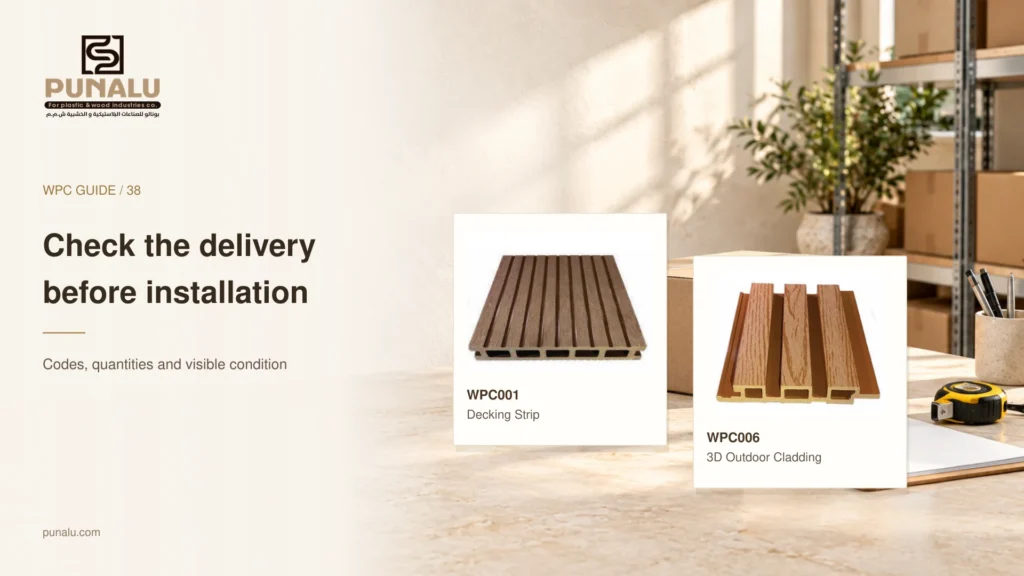
Receiving WPC materials is a useful checkpoint between purchasing and installation. It allows the team to compare what arrived with the approved order, identify visible issues and organize storage before pieces are cut or fixed. A delivery inspection is not a substitute for technical acceptance, but a clear record can make later questions easier to investigate and reduce confusion between different products on site.
Prepare the order reference
Keep the accepted quotation, material schedule, approved samples and delivery information together. The schedule should identify product codes, finishes, supplied lengths, quantities and accessories. If the order contains several applications, separate decking, cladding and other components clearly. Browse PUNALU’s product catalog where needed to confirm the naming used in the enquiry, while treating the accepted written order as the purchasing reference.
Check identification before opening everything
Read available packaging labels and delivery paperwork. Compare codes, quantities and product descriptions with the order. Record batch or production information where supplied. Do not rely entirely on colour to distinguish products that have different shapes or intended applications. If the paperwork uses a different reference, ask for written clarification before distributing the materials across several work areas.
Review visible condition
Inspect accessible packaging and material for visible damage, contamination or other concerns. Take clear photographs showing both the issue and the relevant label or delivery reference. Avoid mixing questionable pieces into normal installation stock. Agree the next step with the supplier and contractor before cutting, cleaning aggressively or attempting a repair that could make the original condition harder to assess.
Compare actual samples
Check that the delivered profile and finish correspond with the approved reference. Review a representative selection under consistent light. A photograph on a phone should not replace the agreed physical sample where one exists. If appearance raises a concern, document it and request clarification rather than inventing a permitted colour tolerance. Any acceptance criterion should come from the applicable specification and purchasing agreement.
Reconcile accessories separately
Count the compatible clips, screws, caps, trims and other specified pieces independently from the main boards. Missing small items can interrupt installation even when the surface material is present. Use PUNALU’s accessories category to identify references for discussion, then check the delivered items against the selected system. A visually similar fixing is not automatically an acceptable substitution.
Follow the storage instructions
Ask for the supplier’s current handling and storage guidance before arranging materials on site. Coordinate a suitable location with the contractor, keeping the product identifiable and protected as instructed. Do not invent universal stacking heights or support spacing from another brand’s guide. Consider site traffic, access routes and the installation sequence so that materials do not need repeated unnecessary movement before use.
Resolve discrepancies in writing
Prepare a concise list stating the order reference, affected product, quantity and observed issue. Attach photographs and record the agreed action. Keep delivery acceptance separate from approval of the final installed work. The article on common decking installation mistakes explains why clear product identification and coordinated instructions remain important after the delivery check is complete.
Make the record easy to trace
Use a simple receiving sheet with columns for ordered quantity, delivered quantity, product reference and remarks. For any concern, take a wider photograph showing the package, a close view of the condition and a readable image of the label. Keep these together with the delivery date and agreed response. A clear record is more useful than several unlabelled photographs sent separately, particularly when the project receives materials in multiple deliveries. Ask the receiving team to keep this record available to the installer and purchasing contact.
Before work starts, confirm that the installer has the correct current product documents and that outstanding questions have been resolved. Contact PUNALU with any material discrepancy using the order details. A documented handover from delivery to installation gives everyone a clearer starting point and preserves the evidence needed if further clarification becomes necessary.