
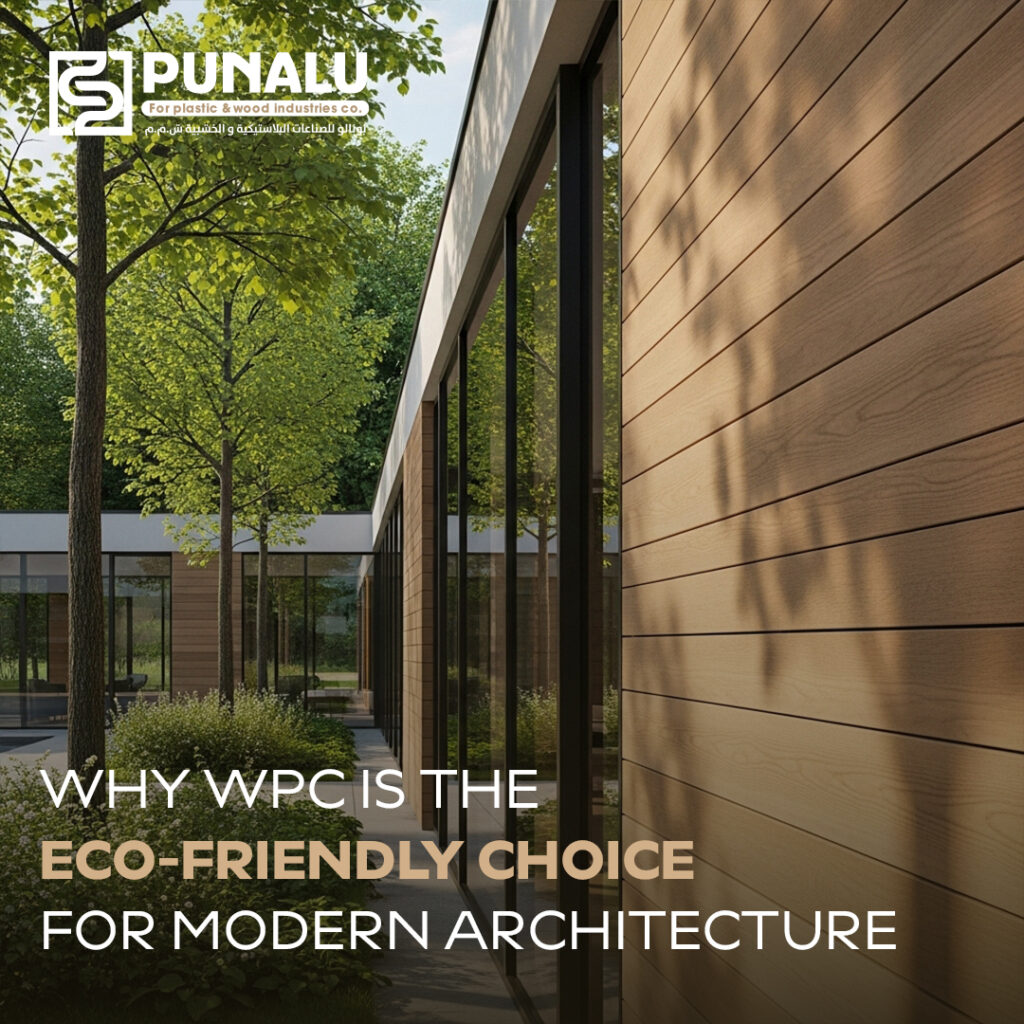
🌿 Why WPC Is the Eco-Friendly Choice
Discover how WPC materials promote sustainable construction in Egypt — combining durability, beauty, and responsibility.
Every square meter of WPC saves up to 2 kg of plastic and 1.5 kg of wood waste. Here are the 7 reasons why it's the future of green architecture.
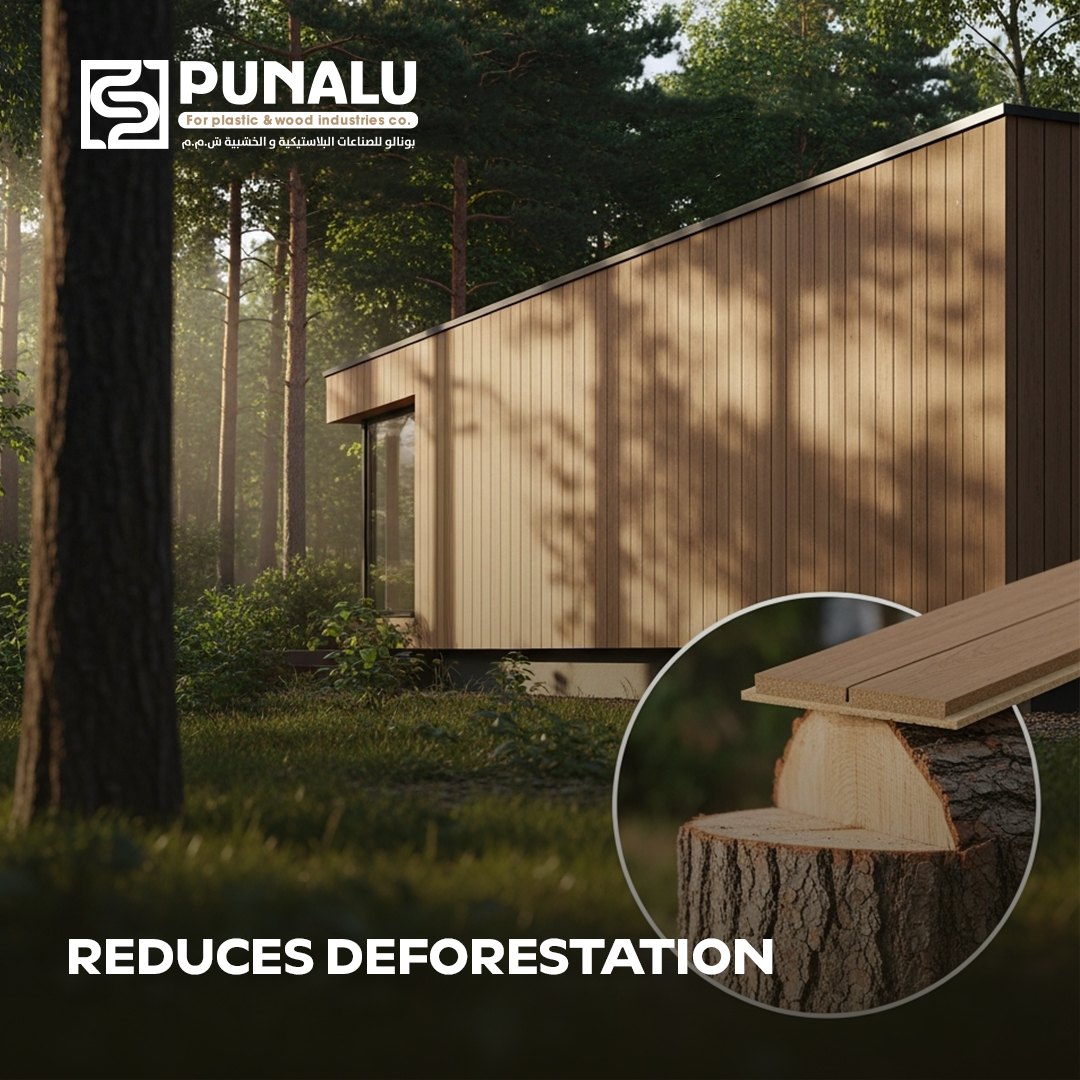
Reduces Deforestation
Traditional wood requires cutting down trees. WPC uses wood by-products (sawdust/chips) instead of new timber. This preserves forest ecosystems while giving you the same warm, natural look.
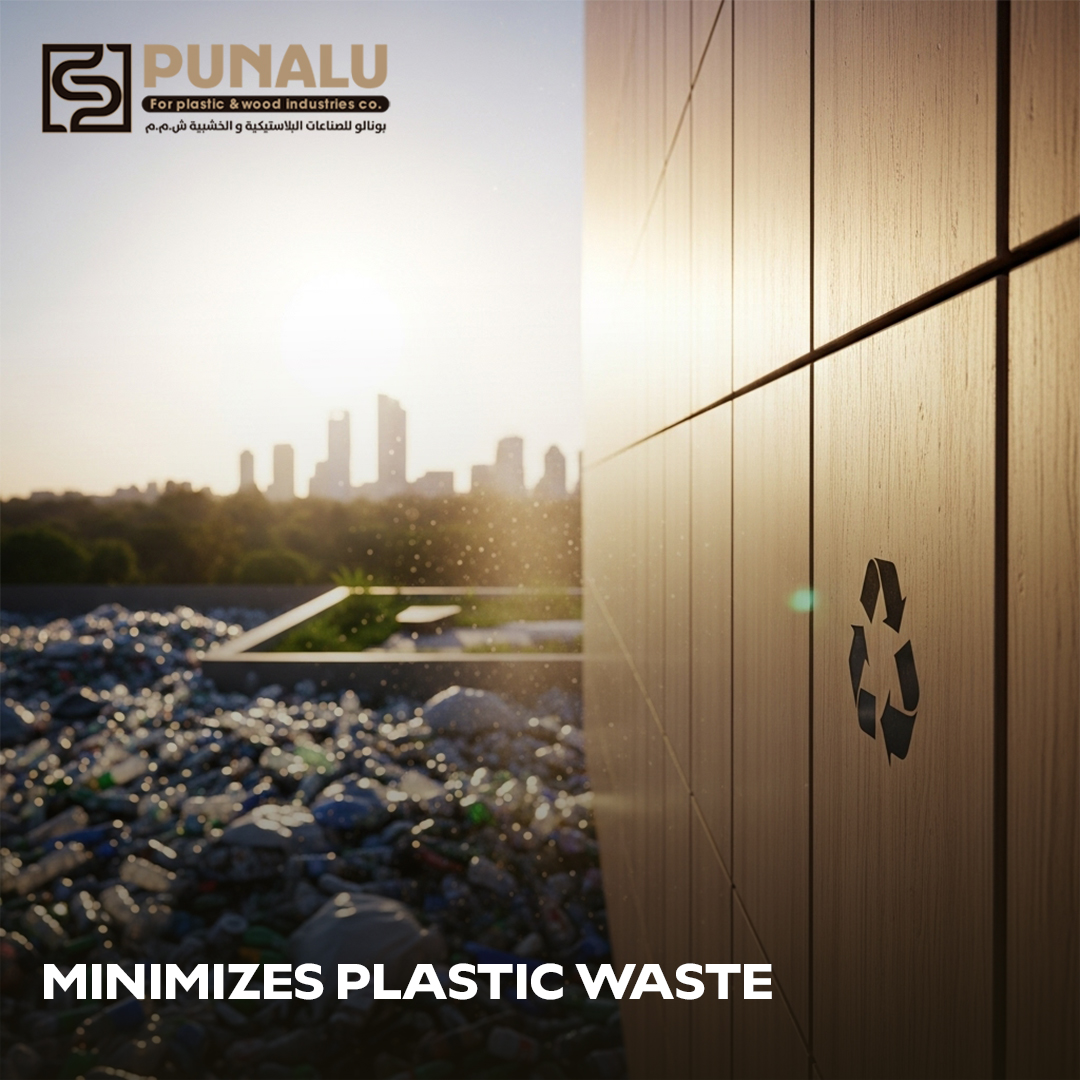
Minimizes Plastic Waste
Egypt produces tons of plastic waste. WPC is a solution. By blending recycled HDPE plastics into our panels, we divert waste from landfills and turn pollution into beautiful architecture.
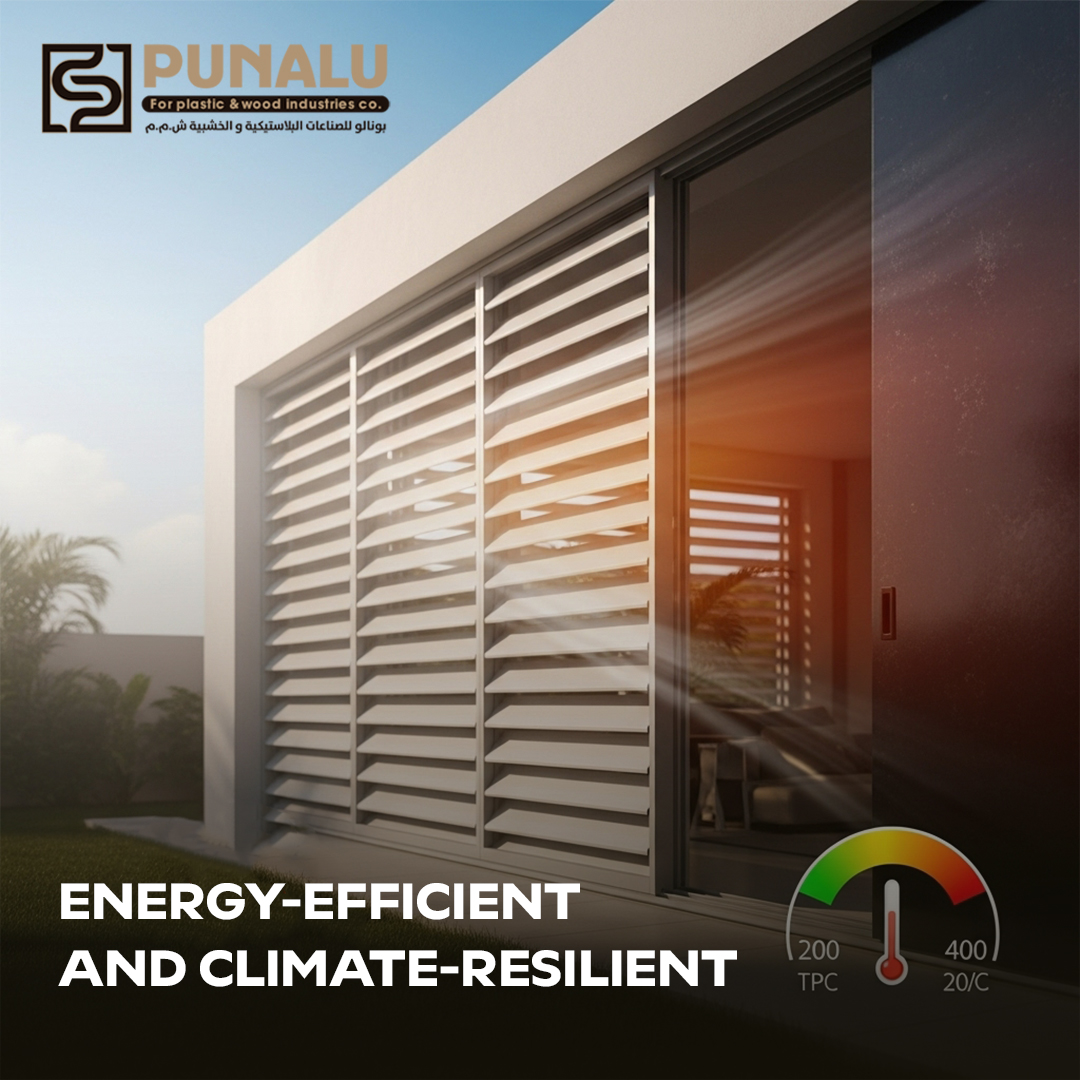
Energy Efficient
WPC reflects sunlight better than dark wood or metal. When used in louvers or cladding, it reduces heat gain in buildings, lowering your AC usage and energy bills.
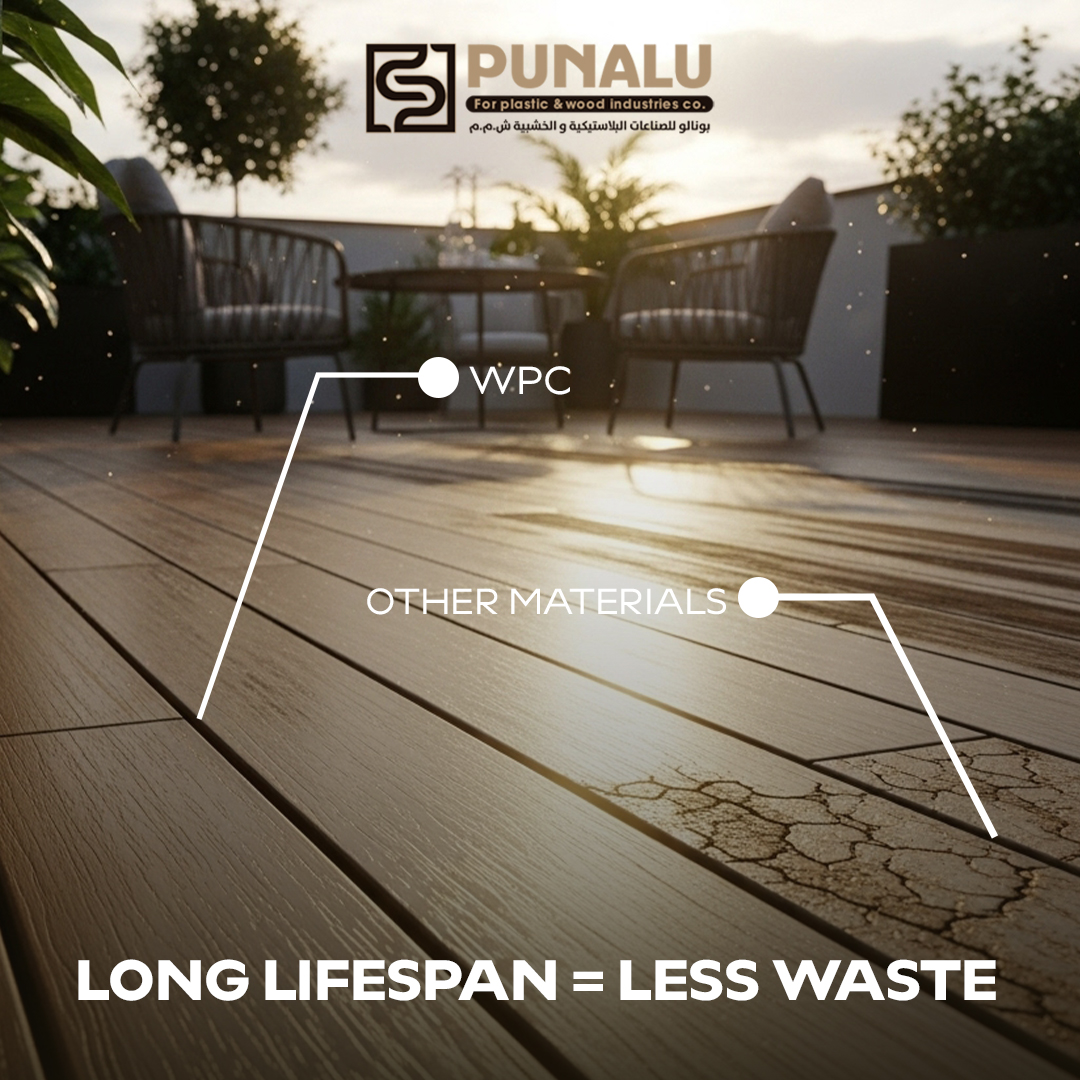
Long Lifespan = Less Waste
Sustainability is about longevity. WPC lasts 20-25 years. Wood lasts 5-8. By needing fewer replacements, WPC drastically reduces long-term consumption and waste.
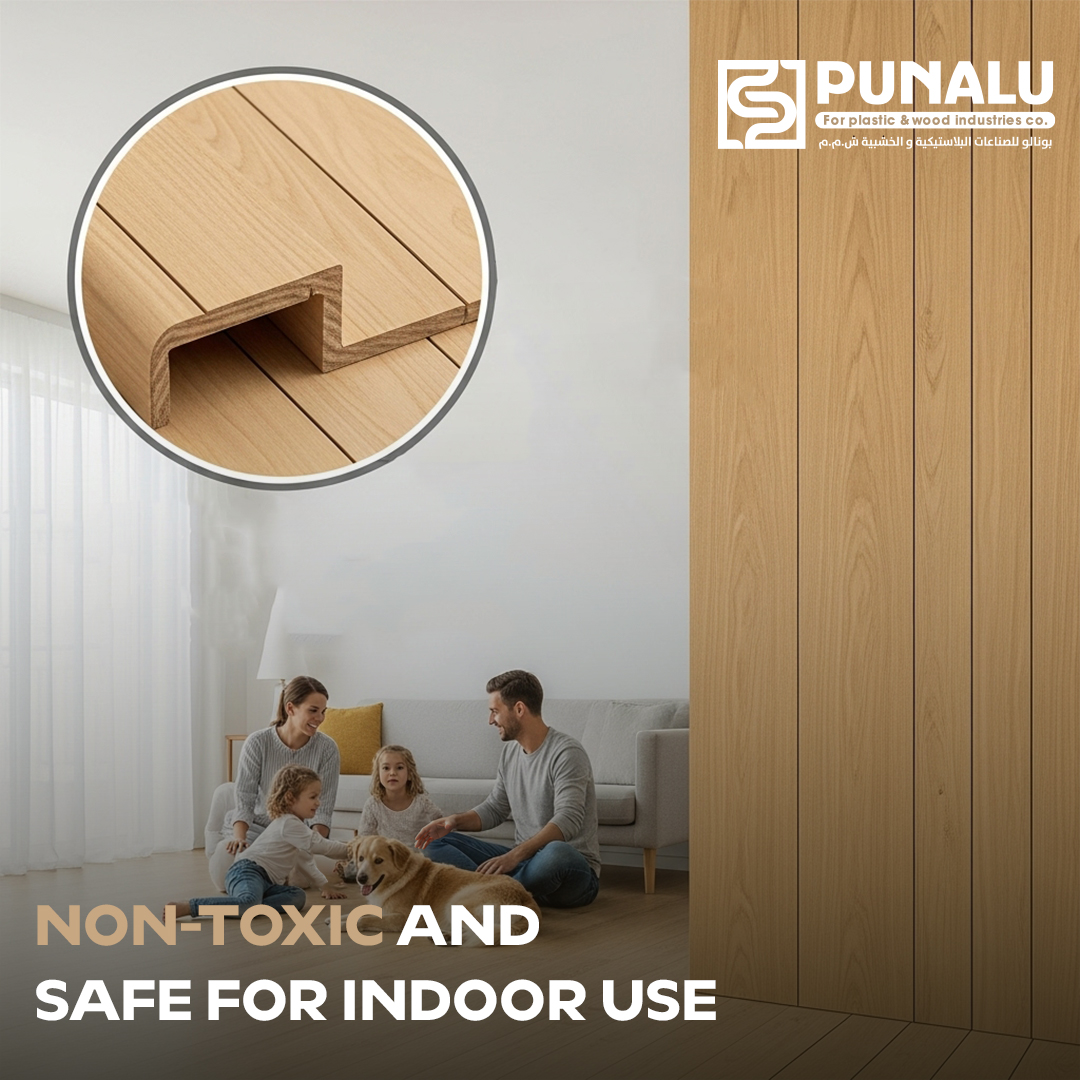
Non-Toxic & Safe
Punalu WPC is free from toxic chemicals like formaldehyde and lead. It has Zero VOC emissions, making it safe for indoor air quality in homes and schools.
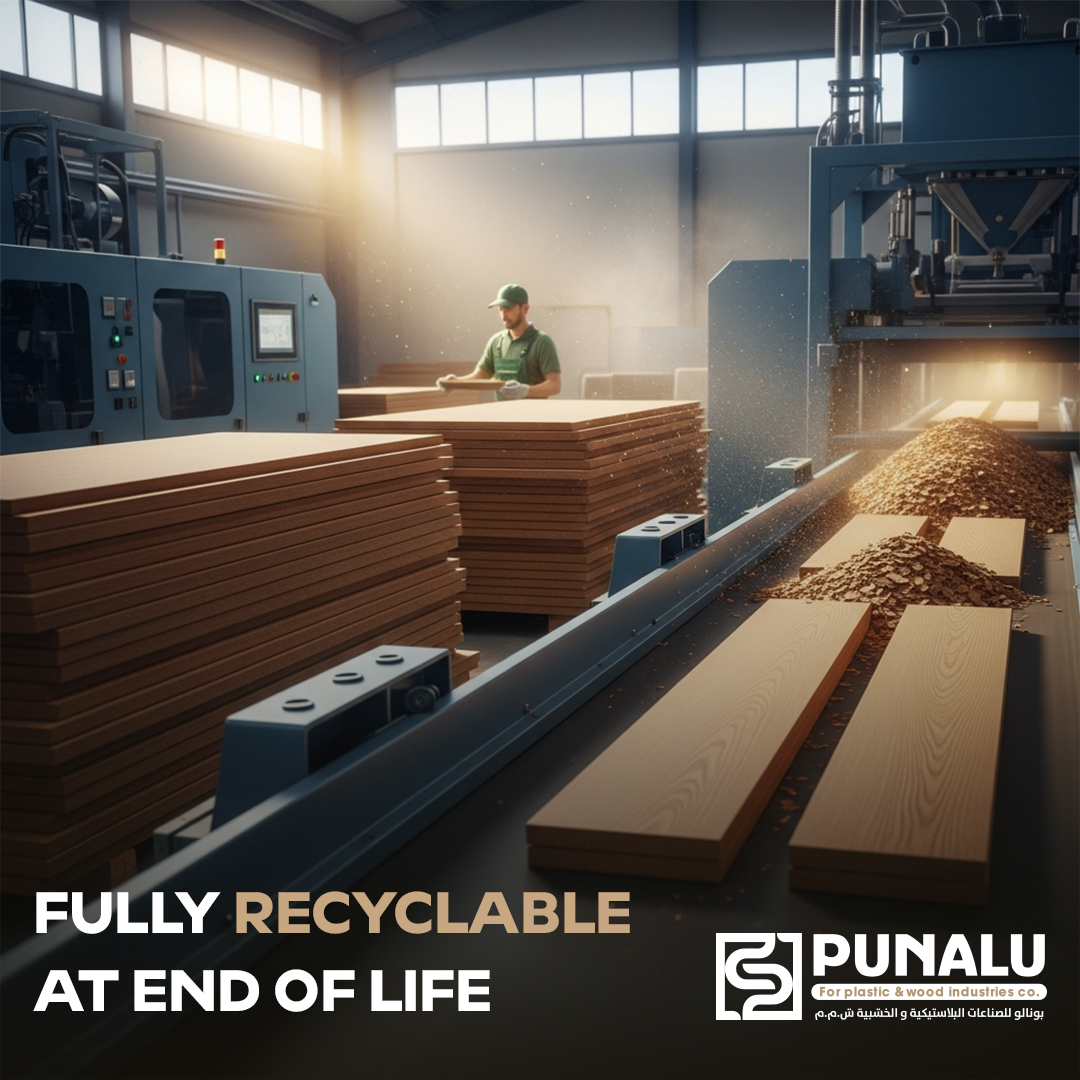
Fully Recyclable
It's a closed loop. At the end of its life, WPC can be recycled again. Unlike PVC or MDF which often ends in trash, WPC supports the circular economy.
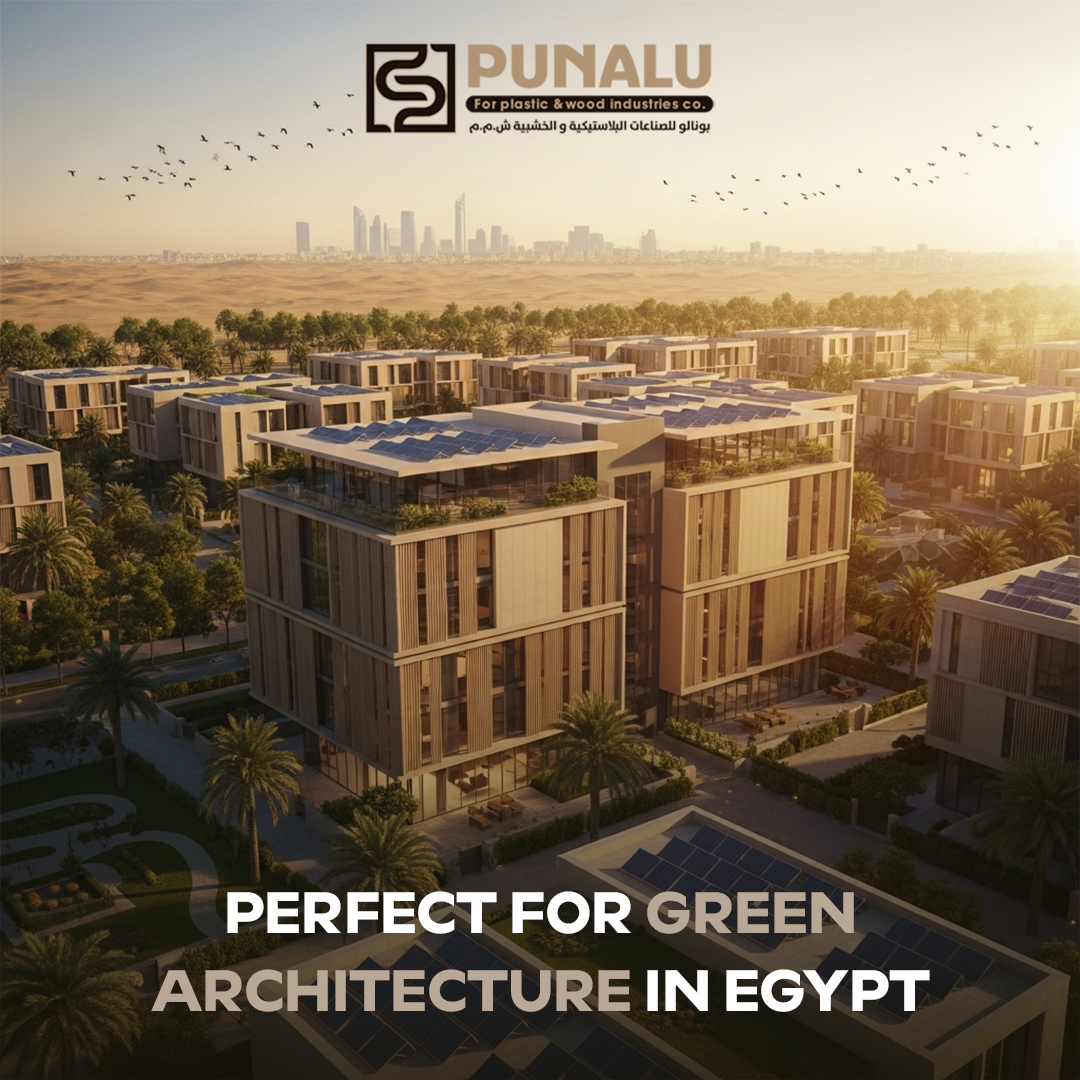
Supports Green Architecture
Matches LEED and EDGE criteria. From New Alamein to the New Capital, WPC is the standard for modern, eco-conscious Egyptian construction.
📊 Sustainability Scorecard
| Material | Lifespan | Sustainability Score |
|---|---|---|
| Natural Wood | 5-8 Years | ⚠️ Moderate (Deforestation) |
| PVC | 7-10 Years | ❌ Low (Synthetic) |
| WPC (Punalu) | 20-25+ Years | ✅ Excellent (Recycled) |
