
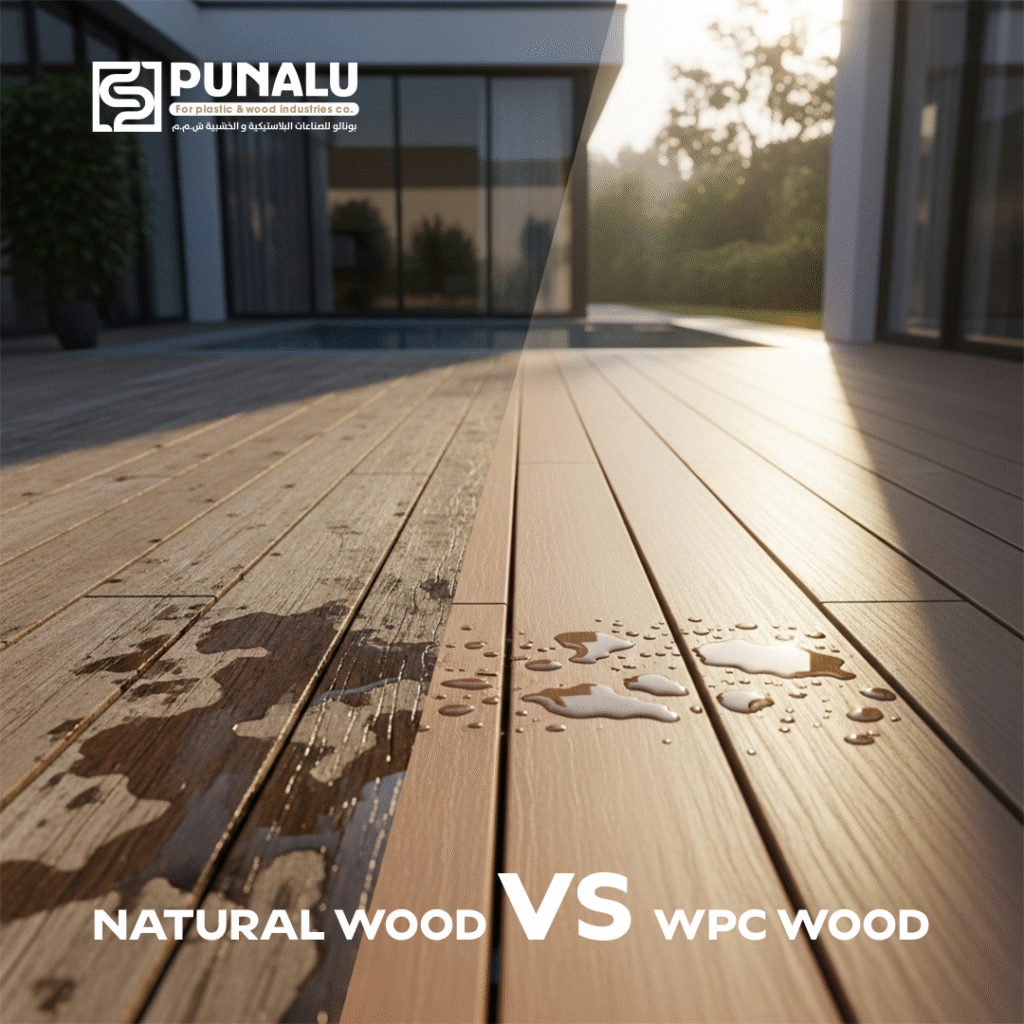
If you’ve browsed modern Egyptian showrooms or home renovation pages lately, you’ve probably come across the term WPC — Wood Plastic Composite.
Whether it’s stylish wall panels, waterproof doors, or luxury outdoor decking, WPC has become the buzzword of modern architecture.
At Punalu, we’ve seen a major shift in how Egyptian homeowners and designers are replacing traditional wood with WPC and for good reason. It offers the beauty of wood, the strength of engineered materials, and the sustainability today’s world demands.
What Does WPC Stand For?
WPC stands for Wood Plastic Composite, a hybrid material made by combining:
- Recycled natural wood fibers
- HDPE (High-Density Polyethylene) — adds strength and water resistance
- Additives — UV stabilizers, pigments, antioxidants, and bonding agents
This blend undergoes advanced extrusion to create panels and profiles that mimic the appearance of wood without its weaknesses. This precise formulation gives WPC its unique balance: a warm, wood-like appearance with engineered durability.
Why WPC Is a Game-Changer in Egypt
Egypt’s environment poses real challenges for natural wood — heat, humidity, dust, and temperature fluctuations all shorten its lifespan. WPC solves these issues elegantly.
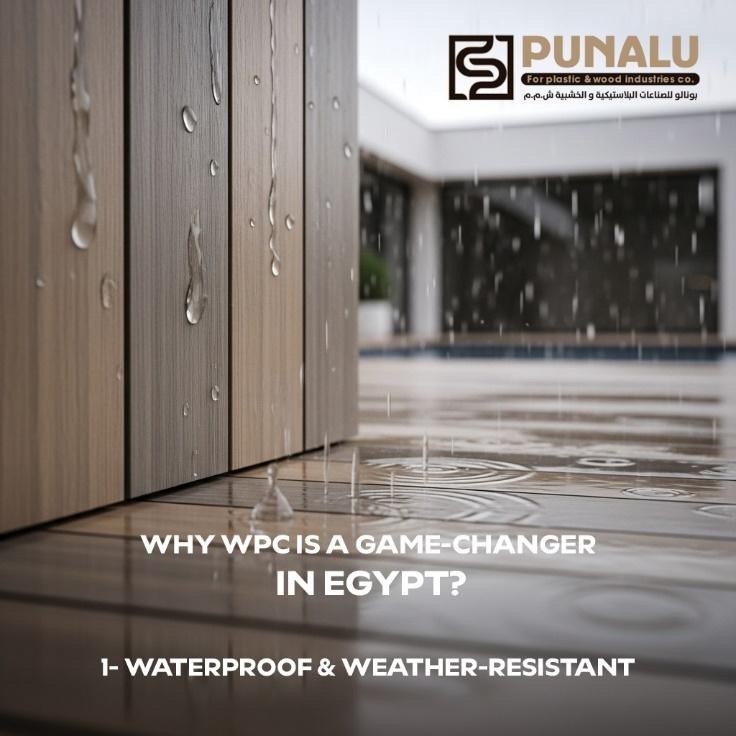
1. 100% Waterproof and Weather-Resistant
Unlike natural wood, WPC does not absorb water. It will not warp, swell, or crack when exposed to moisture.
Perfect for: Bathrooms, Kitchens, and Outdoor spaces.
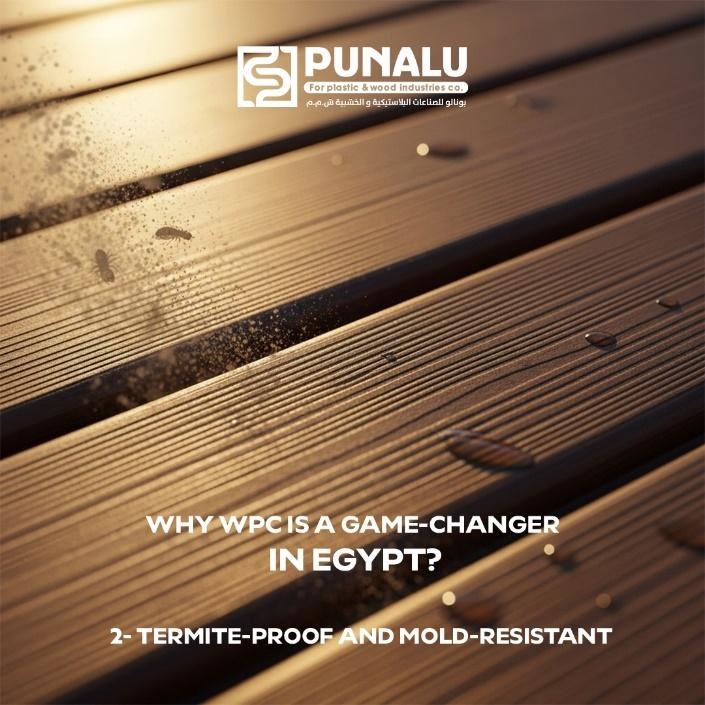
2. Termite-Proof and Mold-Resistant
The HDPE component prevents termite infestation, fungus, and mold growth. Ideal for villas, coastal homes, and high-humidity spaces.
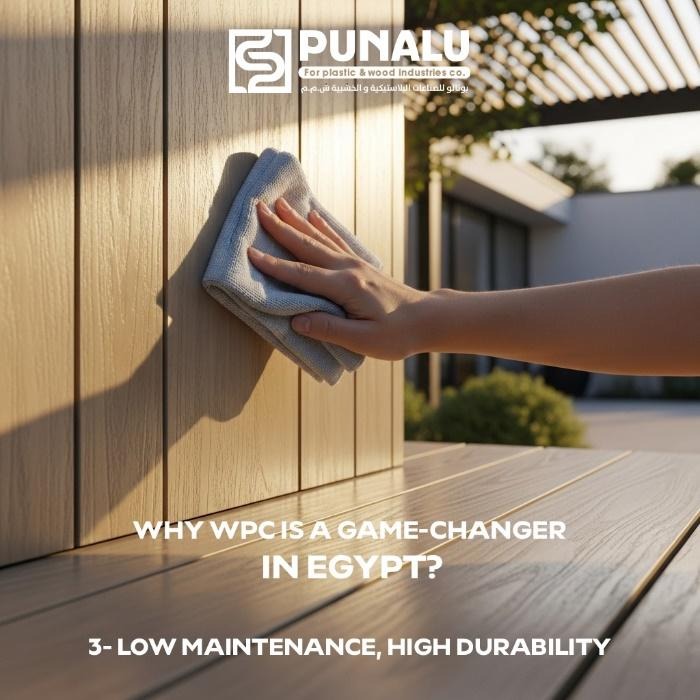
3. Low Maintenance, Long Lifespan
Say goodbye to annual sanding, polishing, or repainting. A simple wipe-down keeps WPC looking new for 20–25+ years.
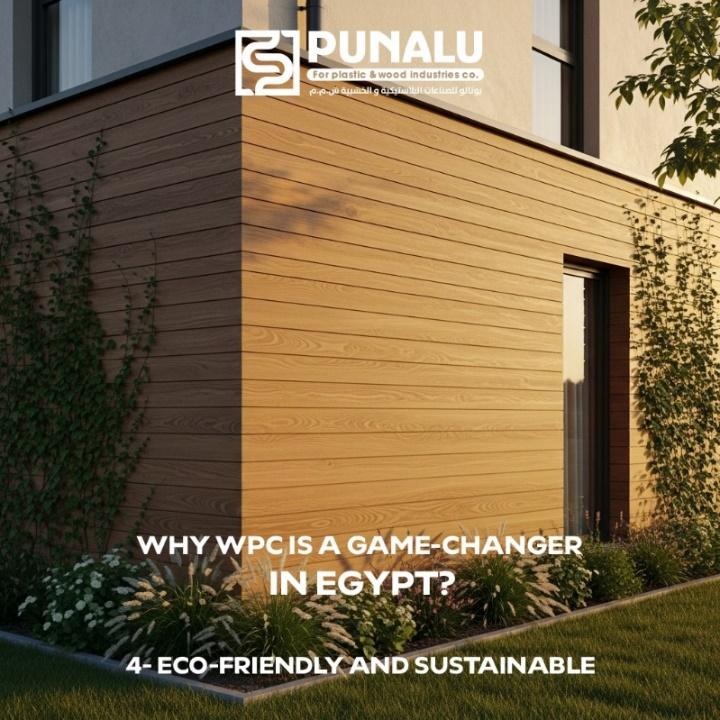
4. Eco-Friendly and Sustainable
WPC uses recycled wood fibers and recycled HDPE. This reduces plastic waste and preserves natural wood resources, making it a responsible choice for eco-conscious architects and homeowners.
5. Versatile Design Options
WPC can be crafted into matte finishes, fluted/grooved textures, wood-grain surfaces, and modern or classic styles.
How WPC Is Transforming Home Design
1. WPC Wall Panels
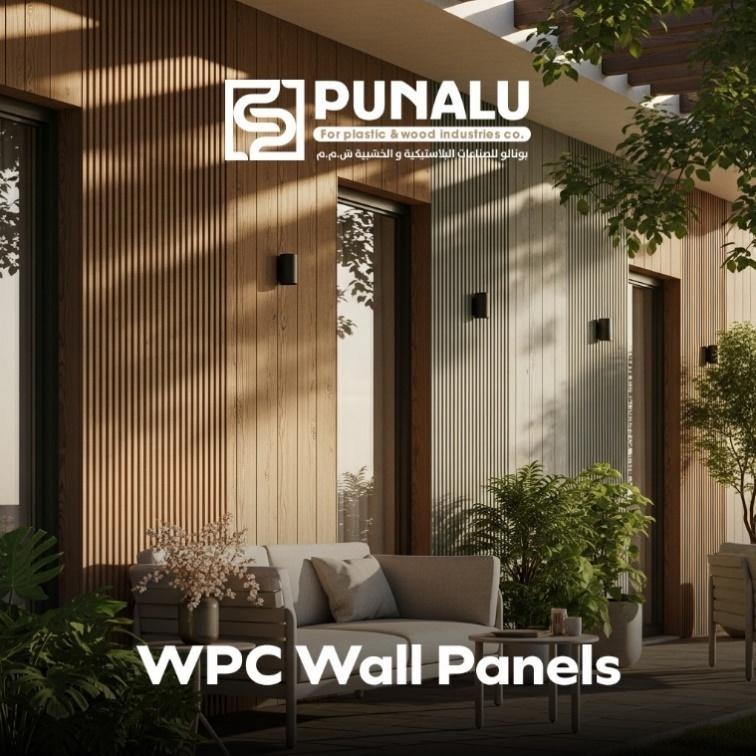
A signature element of modern luxury interiors. They deliver a seamless look while offering light sound insulation, waterproof performance, and quick, clean installation (no messy plaster). Available in fluted designs, grooved styles, and marble-inspired textures.
2. WPC Doors & Frames
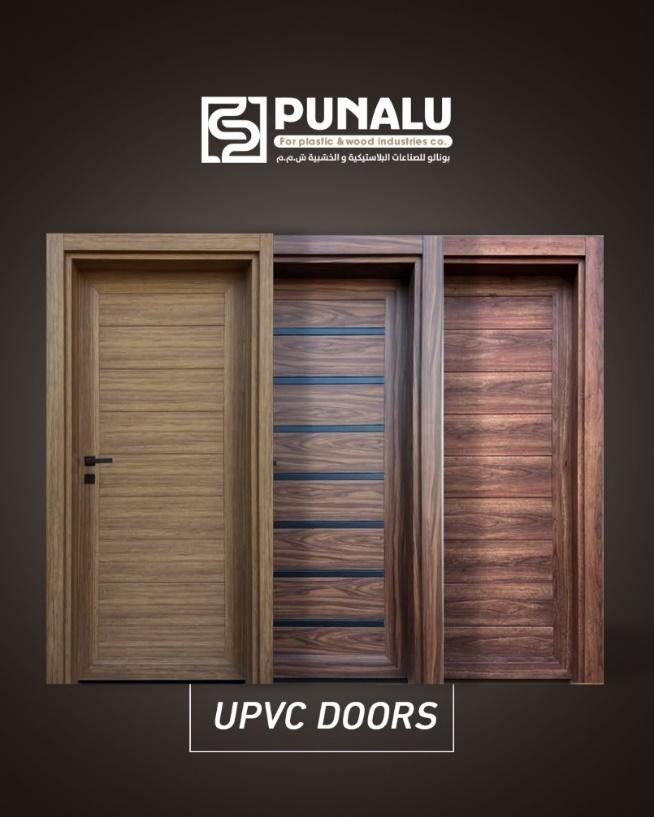
WPC doors combine the elegance of wood with waterproof and termite-proof properties.
- Perfect for kitchens, bathrooms, and laundry rooms
- Do not expand, rot, or warp like MDF
- Easy to clean and long-lasting
3. WPC Decking & Pergolas
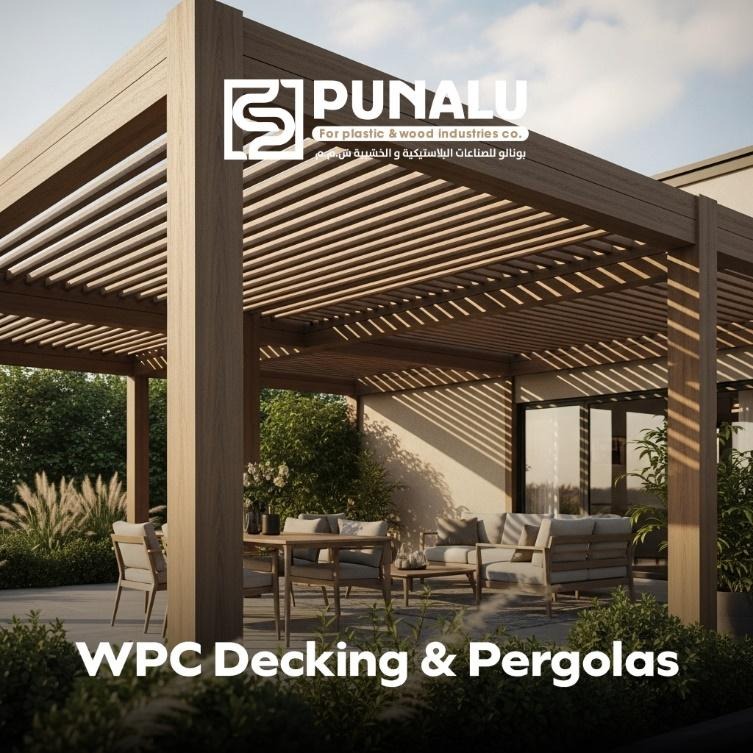
For outdoor spaces, WPC decking is unmatched. It is UV-protected for color stability, features a non-slip surface ideal for pools, and withstands heat and rain without cracking.
4. WPC Louvers & Exterior Cladding
Architects choose WPC louvers for clean vertical or horizontal lines, reducing heat and glare, and maintaining color and shape under UV exposure. Suitable for villas, facades, and commercial buildings.
